In Northglenn's older neighborhoods, the first sign is usually a basement floor drain that gurgles or a toilet that bubbles after a load of laundry. The city began as a planned subdivision in 1959 and had about 3,000 homes by 1962. Sewer laterals from that era are often clay or cast iron, and roots find the joints in clay pipe. They catch grease and paper until the line backs up.
If water is rising in a drain or tub, stop using water in the house, including the washer and dishwasher, and leave the toilets alone. A plunger will not clear a root-blocked main. Drain cleaning opens the line, and we run a camera through it to see whether the cause is roots, a bellied section or a cracked joint before we recommend digging. If the pipe is damaged, sewer line repair comes with a written scope and price for you to approve before work begins.
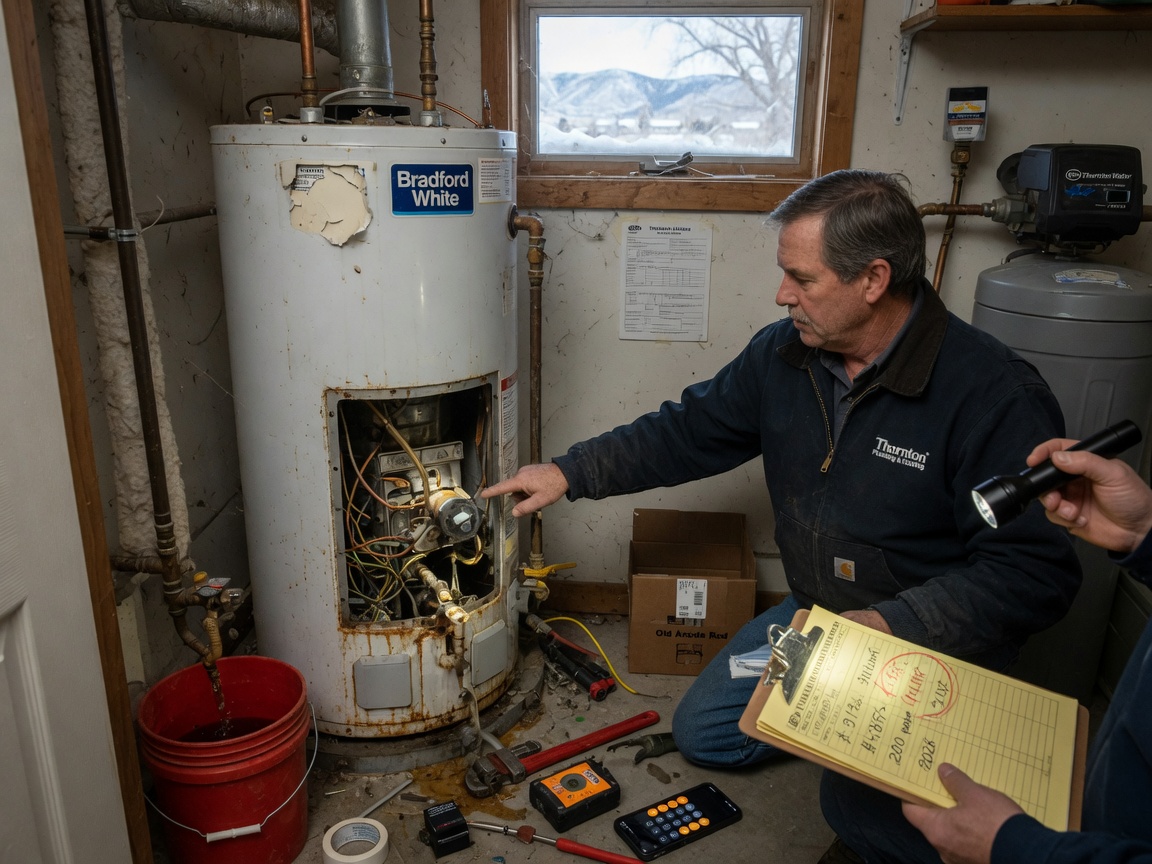
The other common call is the water heater. Water around the bottom of the tank, rust-colored hot water, or a rumble when it heats points to a leaking tank, sediment on the lower element or a spent anode rod. Shut the cold supply valve on top of the tank and switch off the gas or the breaker. Whether it is a water heater repair or a replacement depends on whether the tank itself is leaking.
Cold snaps here can split copper pipe in unheated garages and crawl spaces. If you find a split, shut the main and open a faucet to relieve pressure. Call (720) 856-5811, Monday to Saturday, 9am to 6pm.
Around Northglenn
We regularly work near:
- 📍Northglenn Recreation Center (Community Center Drive)
- 📍E.B. Rains Jr. Memorial Park
- 📍Webster Lake
- 📍Croke Reservoir Nature Area
- 📍Fox Run Open Space
Plumber in Northglenn · Local Notes
- •Northglenn began as a planned subdivision in 1959 and had about 3,000 homes by 1962, so many sewer laterals and supply lines are more than 60 years old.
- •Sewer laterals from that era are often clay or cast iron, which are prone to root intrusion at joints and to bellies where the ground has settled.
- •The city treats its own water at a plant on W. 112th Avenue, drawn from Standley Lake. Sediment that settles in a tank bottom shows up as rumbling or popping when the heater runs.
- •Expansive clay soil is widespread along the Front Range, and the Colorado Geological Survey lists sewer lines among the things it damages as it swells and shrinks.