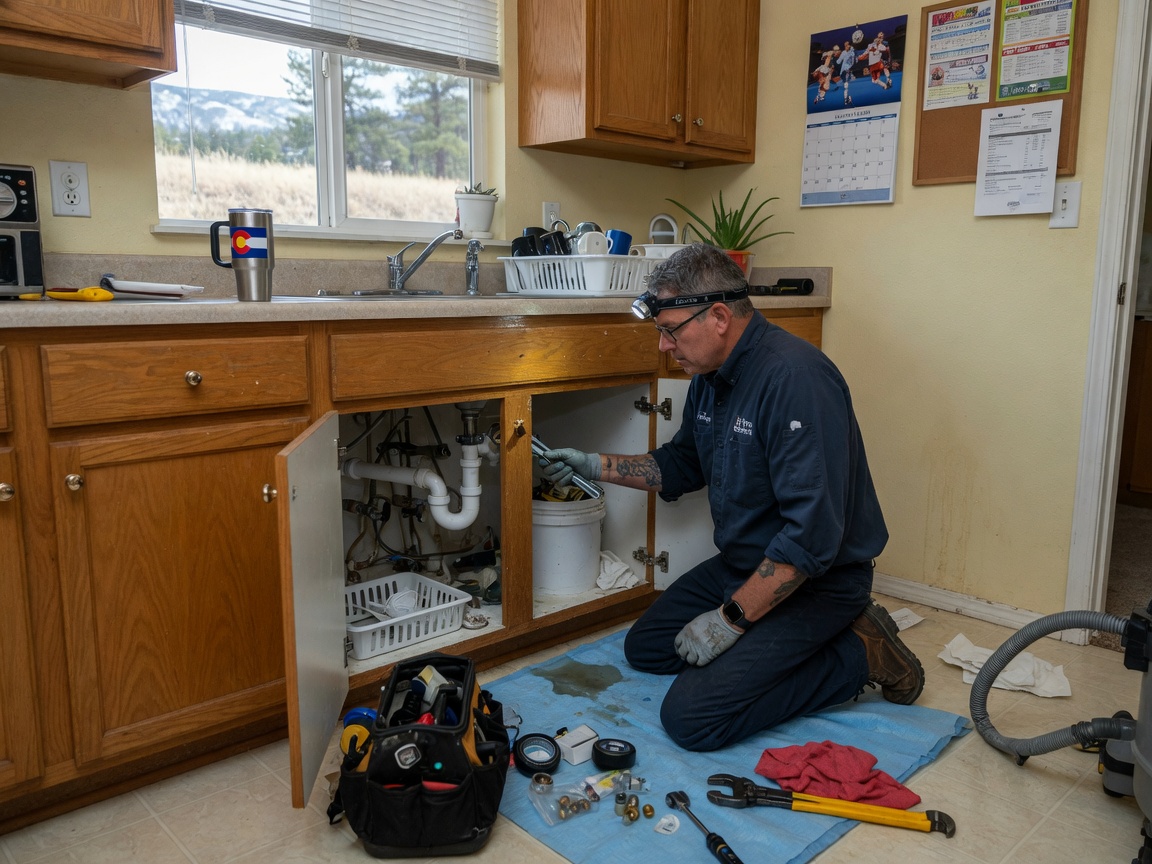
Westminster homeowners usually notice trouble as low pressure at one faucet, rust-tinted water or a wet patch on the floor. The city grew from 235 people in 1920 to more than 116,000 in 2020, so homes range from mid-century to recent, and pipe material changes street by street. The city says the service lines it has identified are copper, and that some older homes may still have galvanized steel, which corrodes from the inside and chokes the flow.
If water is visibly running, shut the main valve and stop there. If pressure is low at every fixture, check whether the meter dial is still moving with everything off. That points to a leak on the line from the meter to the house, which is water line repair. A wet spot inside a wall, ceiling or slab is usually water leak repair.
Drains are the other common call. Older clay and cast iron sewer laterals let roots in at the joints, and grease narrows the line until it backs up into the lowest drain in the house. Stop using water and call. Drain cleaning opens the line, and we run a camera through it before recommending digging.
Cold snaps can split copper pipe in an unheated crawl space or garage, and a water heater that has been leaking slowly can fail in the same week. Shut the cold supply valve on top of the tank if it is the source. Call (720) 856-5811, Monday to Saturday, 9am to 6pm.
Around Westminster
We regularly work near:
- 📍Standley Lake
- 📍Big Dry Creek Trail
- 📍The Orchard Town Center
- 📍City Park Recreation Center (Sheridan Boulevard)
Plumber in Westminster · Local Notes
- •Westminster spans Adams and Jefferson counties, and its housing runs from mid-century neighborhoods to new builds, so supply and drain materials vary block by block.
- •The city's only water source is Standley Lake, and it reports no lead in the source water or in the water leaving its treatment plants.
- •The city says the service lines it has identified are copper, but some older homes may contain galvanized steel lines that corrode and restrict flow.
- •Expansive clay soil is common along the Front Range, and the Colorado Geological Survey lists sewer lines among the things it damages as it swells and shrinks.