2026-09-30 ·
Repair or Replace Your Water Heater in Thornton?
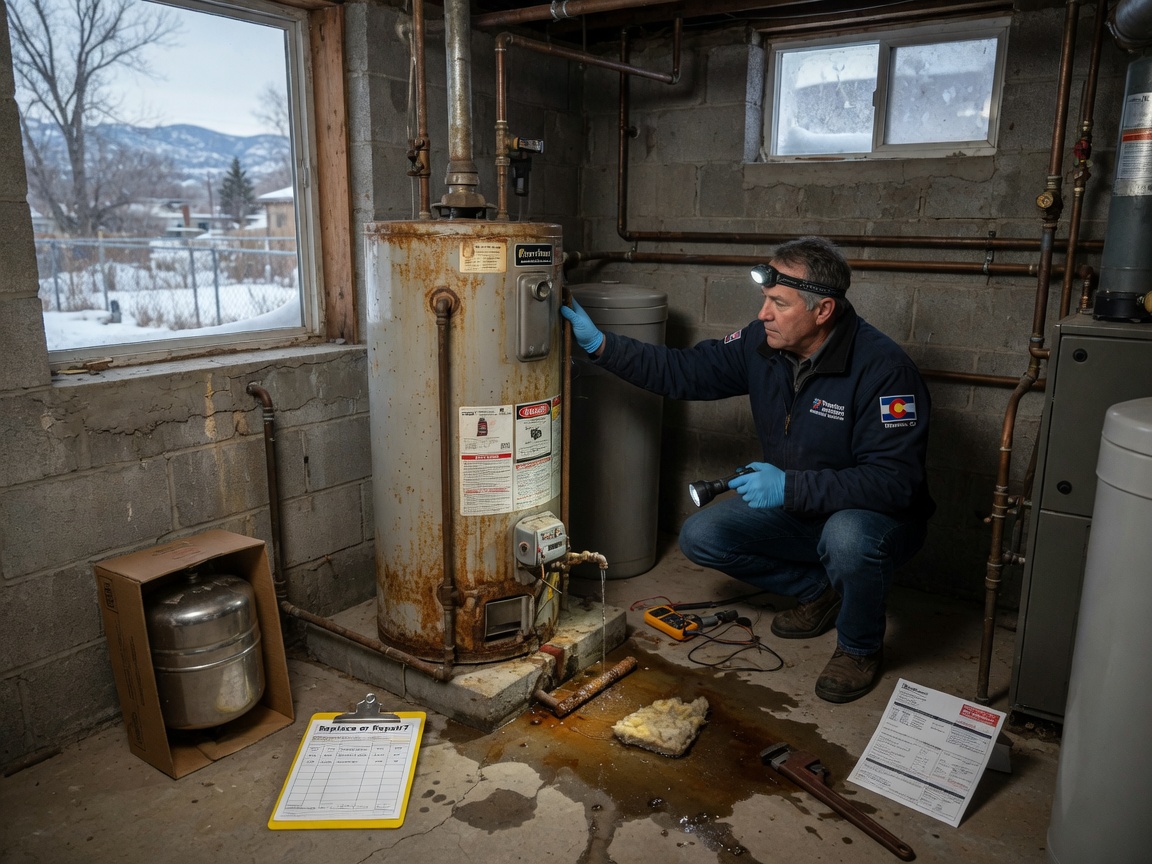
No hot water, a puddle by the tank, or water that runs lukewarm and then cold: the question is the same. Is this a part that failed, or a tank that is finished? In Thornton the answer often comes down to what the tank is made of on the inside and how long it has been sitting on hard water. This page helps you sort out which path you are on. If you already know, our water heater repair and water heater replacement pages cover each in detail.
Signs that point to repair
Repair makes sense when something replaceable has failed and the tank itself is sound. Common ones:
- No hot water on an electric heater: a burned-out heating element or a bad thermostat. Sediment sitting on the lower element is a frequent reason it burns out.
- Gas heater will not stay lit: a failed thermocouple, a dirty pilot, or a gas control problem.
- Water that is not hot enough, or runs out sooner than it used to: a broken dip tube, a failing thermostat, or one dead element out of two.
- Water dripping from the valve on the side or top: the temperature and pressure (T&P) relief valve may have failed or may be reacting to real excess pressure. That needs a look, not a plug.
- Rotten-egg smell or discolored hot water: often a spent anode rod, which can be replaced while the tank is still good.
The pattern is a single, clear cause and a tank body that is dry and clean on the outside.
Signs that point to replacement
Replacement is the answer when the steel tank itself has failed. A tank holds water against corrosion with a thin lining and an anode rod that corrodes first, on purpose. Once the rod is gone and the lining is breached, the steel goes.
- Water coming from the tank body or the seam at the bottom: a leak from the tank itself cannot be patched. Water at a fitting or valve is a different story and may be repairable, which is why it needs to be looked at before anyone decides.
- Rust-colored hot water, but clear cold water: points to a corroding tank rather than rusty pipes.
- Rumbling, popping, or knocking as it heats: heavy sediment baked onto the bottom of the tank.
- Repeated failures: a second element, a second thermostat, a valve that keeps weeping. Each repair is a fair fix, but a run of them says the whole unit is wearing out.
- Sediment damage: a tank so full of scale that it will not heat evenly or drain cleanly.
Why Thornton's water matters
The City of Thornton reports its water averages about 200 mg/L of hardness (about 11.7 grains per gallon), running from roughly 140 in winter to about 250 in summer, and it is not softened at the plant ([thorntonwater.com](https://www.thorntonwater.com)). That is hard water. When it heats inside a tank, dissolved minerals come out of solution and settle as scale on the bottom. On an electric heater the lower element ends up buried in it. On a gas heater the scale sits between the burner and the water, so the tank runs hotter and works harder.
That is why hard water tends to shorten tank life and cause element failures, noisy heating, and an anode rod that is used up sooner. We are not going to quote a lifespan for you. The useful number is on your tank: the data label gives the manufacture date, and a tank that is well along in age and showing any of the signs above should lean toward replacement rather than another repair. A newer tank with a single failed part leans toward repair.
What drives the cost of each path
We do not quote numbers in a blog post, but here is what moves the total.
Repair: which part failed, how hard it is to reach, whether the tank has to be drained first, and whether one repair is likely to be the last one.
Replacement: the type and size of tank, gas or electric, whether the venting, gas line, shutoff valves, or expansion tank need to be brought up to current standards, how easy the old tank is to get out and the new one in, and the permit. The City of Thornton's building permit list includes water heater installation or replacement, and its plumbing permit guidance names water heaters as well ([City of Thornton](https://thorntonco.qscend.com/311/knowledgebase/article/463)). Homes from the 1950s to 1980s in South Thornton (80229) may have older piping, tight closets, or old venting that adds work. Newer homes in North Thornton (80602, 80241) tend to be simpler to swap. For a fuller breakdown, read what water heater repair costs in Thornton.
We explain what we find and put a written scope and price in front of you to approve before any work starts.
Safe first steps while you decide
- Shut the cold supply. The cold water pipe on top of the tank has a shutoff valve. Turn it clockwise until it stops. This stops water feeding a leak.
- Turn off the fuel. On gas, turn the gas control to pilot or off. On electric, switch off the breaker for the heater. Never leave an electric element powered on an empty or draining tank.
- Contain the water. Set a bucket or shop vacuum by the leak. Check for a drain pan under the tank and make sure its drain is not blocked.
- Do not plug the relief valve or its discharge pipe. It is a safety device.
Expansive clay soil is common along the Front Range and can shift slabs and crawlspaces over time, so also look at whether water is pooling on the floor around the tank or coming from somewhere else.
When it is urgent
Smell gas? Leave the house, do not touch switches or a phone inside, and call your gas utility from outside. Then call us once you are safe.
Water coming out of the tank: shut the cold supply as above and call. A leaking tank can flood a finished basement or closet.
No hot water in a cold snap: Front Range cold can freeze pipes in unheated spaces, and a household without heat or hot water is not something to wait on. Call us and we will tell you what to check.
If it is outside our hours, shut the cold supply and turn off the power or gas as described above, then call when the line opens, Monday to Saturday, 9am to 6pm. Our emergency plumber page has more.
Call (720) 856-5811
If you are still not sure whether to repair or replace, call us at (720) 856-5811. It helps to have ready:
- The tank age and label: the manufacturer and the serial number or date on the data plate, plus the tank size.
- Gas or electric.
- What you see: where water is showing up, whether the hot water is rusty, any noises, whether the pilot is lit or the breaker has tripped, and what you have already shut off.
We will tell you what we find, whether repair or replacement fits, and put a written scope and price in front of you to approve before we start.